From Card Payments to Wallets: How Banks Can Regain Control of the Customer Experience
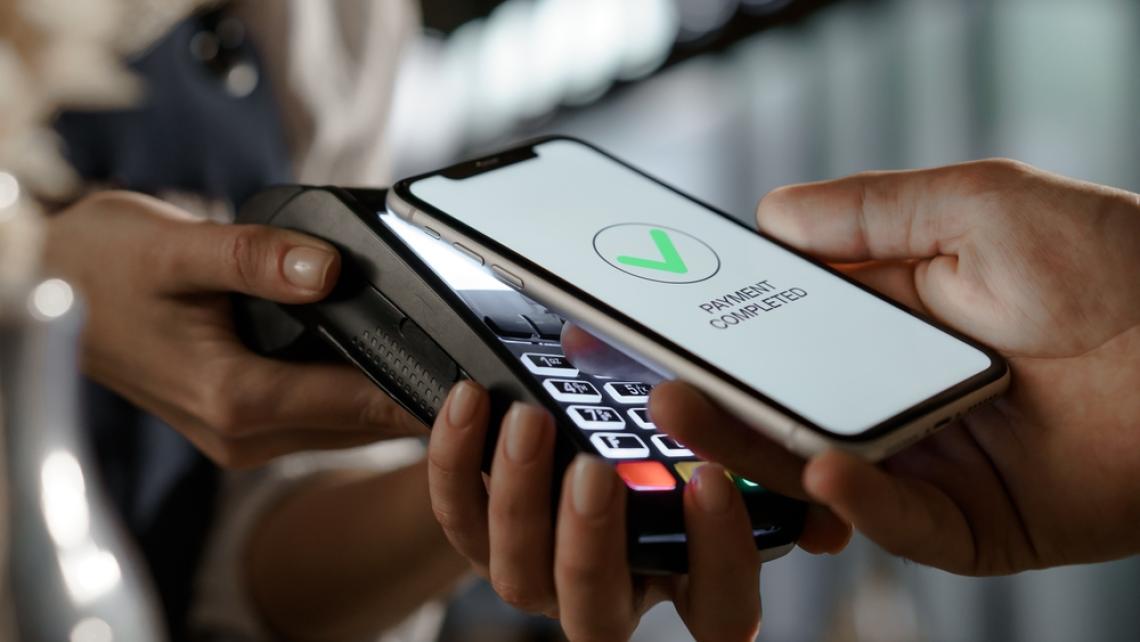
Account-to-account payments, particularly through digital wallets, now make up roughly 30% of point-of-sale volume worldwide, with the fastest uptake in mobile-first economies. Asia Pacific is furthest along. The region accounted for nearly two-thirds of global wallet spending, a combined US$9.8 trillion, and records the highest wallet penetration rates anywhere.
QR-code payments and super-app ecosystems continue to pull customers towards wallet-led journeys in a growing number of markets. So as wallets increasingly shape how people pay, how do banks stay visible and keep customer trust alongside fintechs and alternative payment providers?
Banks are competing to remain central to the customer journey
Wallet-led experiences can push the bank into the background of digital commerce. When a merchant or platform controls the checkout experience, the bank processing the payment becomes invisible to the customer. Competitive pressure is building across both issuing and acquiring, as PayTechs (payment-focused technology providers) and other alternative providers court the same merchants and cardholders that banks have long served. The Capgemini World Payments Report 2026 found that 40% of small and mid-sized merchants plan to switch to PayTechs within a year.
There is room to respond. Most merchants still prefer an established provider, and many would choose moving to a bank that matched a PayTech on service and cost. The gap most often cited is in embedded payment experiences and seamless checkout, both areas where PayTechs have set the pace.
Asia's wallet-first markets show where payments are heading
China, Southeast Asia and South Korea each show large-scale wallet adoption, shaped by local infrastructure and supportive regulation. In China, Alipay and WeChat Pay dominate digital commerce through integrated super-app environments that fold payments into everyday services.
Interoperability shaped Southeast Asia's path. National schemes such as QRIS in Indonesia and PromptPay in Thailand have standardised QR-based acceptance across participating wallets and merchants, with interoperability now extending across borders.
South Korea offers a third pattern, where mobile "simple payments" authenticated by password or biometrics keep gaining ground, with Naver Pay and Kakao Pay holding the largest share among providers.
Card networks are also extending their reach into wallet-dominated markets. Visa's QR Connector enables consumers to use their existing digital wallet to scan and pay at local QR merchants when travelling abroad, with Visa routing the payment through its network. Mastercard Pay Local takes a similar approach, allowing cardholders to link their credit or debit card to participating local wallets and pay at merchants without needing a separate prepaid account. Both initiatives keep card network infrastructure at the centre of cross-border wallet payments.
Tokenisation keeps banks at the heart of the wallet experience
Payment tokenisation has matured into the foundation for digital wallets and frictionless commerce. When a card is provisioned into a digital wallet such as Apple Pay or Google Pay, network tokenisation (managed by card schemes) replaces the card's primary account number with a unique token. This lifts authorisation rates, reduces fraud and smooths recurring and one-click payments. Importantly for banks, the issuer stays at the centre of that process.
How HPS helps
HPS gives banks and payment providers the technology to compete as wallet operators, covering card issuance, tokenisation and the deployment of their own digital wallet and A2A payment services.
PowerCARD-Issuer provides complete services for issuing and managing all payment types across plastic, virtual, mobile wallet and token formats, on a single multi-currency, multi-institution platform. PowerCARD-Tokenisation supports the issuance, provision, storage and management of tokens from any scheme on any type of wallet, secured by an embedded token vault and PCI-DSS-reinforced services.
The HPS Group Digital Wallet enables institutions to launch their own branded wallet-based payment services, including P2P, P2M, bill payments and QR code payments, across embedded prepaid accounts or existing banking cards and A2A rails. The solution supports EMV QR codes and is readily configurable and quick to deploy. One bank's digital wallet onboarded over 2.5 million customers in less than two years.
Preparing for a wallet-led future
The move from cards to wallets is reshaping how payment experiences are delivered across global markets. Banks that act now have the opportunity to define that experience, deploying their own wallet services, integrating A2A capabilities and keeping card credentials secure through tokenisation. For issuers and acquirers adapting to this landscape, the right infrastructure is what turns wallet adoption from a competitive pressure into a strategic opportunity.
Contact the HPS Sales team at sales@hps-worldwide.com to learn more, or visit the PowerCARD-Issuer, PowerCARD-Tokenisation and HPS Group Digital Wallet pages for further information.